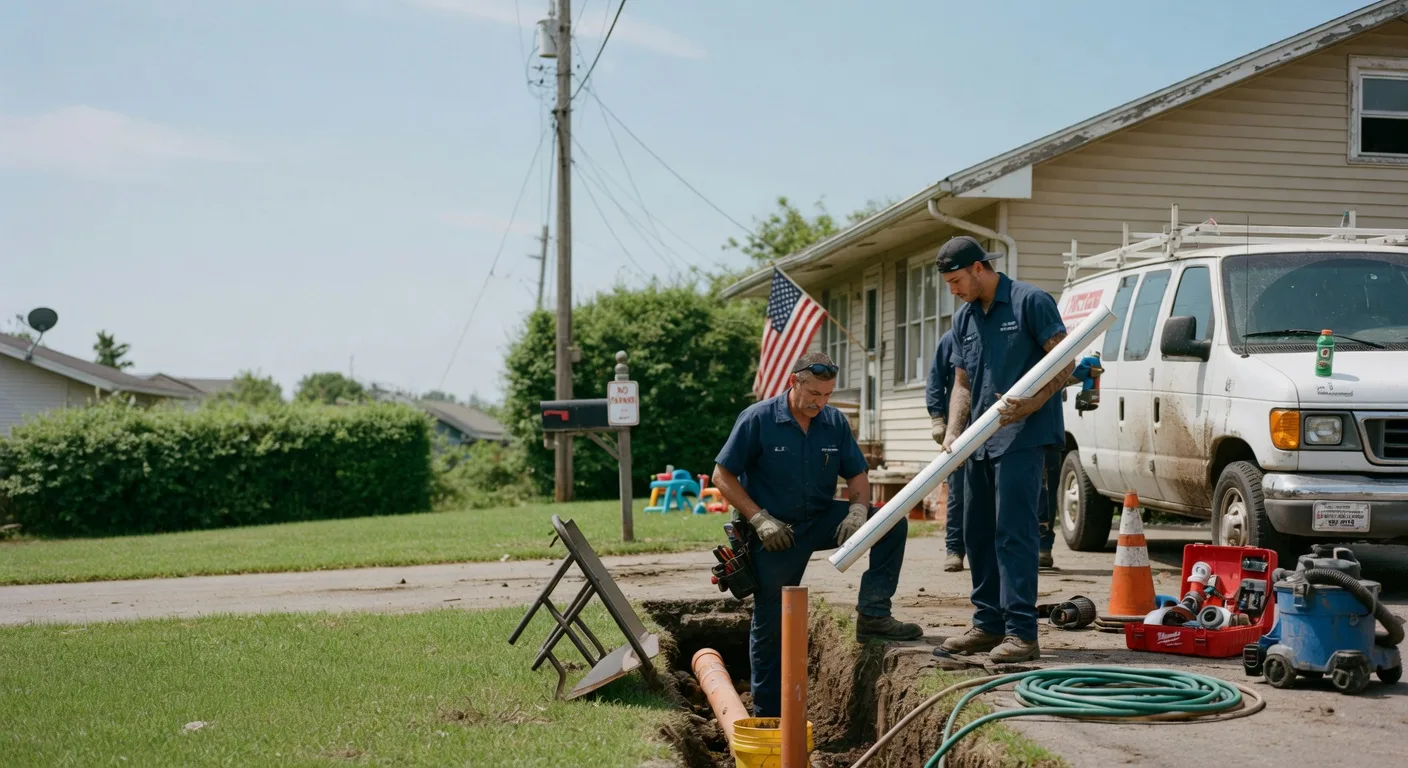
My drains back up every autumn. Why is it seasonal?
That pattern is a clue. Drains that back up every autumn usually have a fixed fault that the season exposes.
Roots chase moisture and grow most actively in the warm months. A clay joint that was passable in spring can be choked by late summer. Then the first heavy autumn rain loads a line that was already marginal, and it backs up.
Leaves are the second cause. Leaves and seed debris wash into a yard drain, a window well or an open cleanout and pack the line. A third cause is a blocked vent stack. Leaves over the roof opening cause gurgling and slow flow without any clog in the pipe.
Safe homeowner check: clear the gutters and the yard drain grate, lift leaves out of the window well, and check that the cleanout cap is seated. Listen for gurgling after a toilet flush.
Stop running water and call now if every drain in the house is slow or backing up, if the lowest tub or floor drain bubbles or fills, or if sewage odor is strong. Those signs point to the main line or a failed sewer lateral. Water used in the house only adds to the backup. Emergency Drain Cleaning calls come from exactly this situation.
A single slow fixture is a cable job. A line that clogs on a schedule is a camera inspection case, because the interval is a symptom of a fixed fault. The camera shows whether it is root intrusion, a bellied section or a damaged joint. Hydro jetting clears the line, and the repair deals with the cause.
Expert Plumbers Co is a referral service. We refer homeowners in Hunter, KS to an independent local plumber. Call (380) 262-9173.
Keep a simple log. Note the date, the weather and which fixtures backed up each time. If the dates cluster on rainy days, a storm load or root problem fits. If they follow leaf fall in dry weather, look first at the vent stack and the outside drains. Hand the log to the plumber. It saves a lot of guessing.
If you can plan ahead, book a camera inspection in late summer, when roots are at their thickest and the line is not under storm load. Cutting roots back then, before the rain, is a calmer job than an overnight backup.
Be wary of root-killing foam as a cure. It can slow regrowth, but it does not repair the joint where the roots get in, and they return. Shallow-rooted trees near the lateral, such as willows and maples, are repeat offenders, so mention what grows near the line. Learn where your cleanout is before you need it.
Water comes up in my bathtub when the shower or the sink next to it is running. What does that mean?
When water appears in the tub while another fixture runs, the drain water has nowhere to go and is finding the lowest open drain in the bathroom, which is usually the tub. It means the shared drain line past those fixtures is restricted. It is not a tub problem.
The tub drain sits low and connects to the same branch as the sink and often the toilet. If a clog, a bellied pipe holding water, or roots at a joint slows that branch, the extra flow from the sink backs up through the tub drain. A tub that gurgles or burps is showing you the same thing.
The timing tells you something. If it happens only when the sink runs, the blockage may be in that shared branch. If it also happens when the washing machine or a toilet elsewhere in the house is used, the main drain is the likelier suspect, and the whole line is slowing down.
Safe checks you can do: run the sink alone and watch the tub, then run the shower alone and watch the sink. Check whether a basement floor drain or other low drain shows water too. Pull the tub stopper or strainer and clear any hair. Do not keep running water to see how bad it gets, and do not use chemical cleaner in a drain that is already backing up, since the liquid can come back up to your skin.
A cable machine often clears a soft clog in a branch line. If the backup returns, it needs a camera inspection to show whether roots, a bellied section, or a damaged joint is behind it, and hydro jetting may be the next step for grease or heavy buildup on the pipe wall.
Stop running water and call right away if the water in the tub is dark or smells like sewage, if it rises when you flush, or if other drains in the house are slow. That points to the main sewer line, and wastewater is a health risk. Keep children and pets out of the bathroom.
Cost depends on access, how far the blockage sits, whether a cleanout is available, and how much has to be opened or replaced.
Expert Plumbers Co can connect you with an independent local plumber in Hunter, KS when you call (380) 262-9173.
The plumber cleared my line but said the pipe itself has a problem. How do I make sense of the options he lays out?
It is a letdown to pay for a cleared drain and then hear that the pipe is the real trouble. It is also useful information, as long as you understand what you are being offered.
Start by asking what the problem actually is. Common answers include roots entering a clay joint, a bellied section that holds water, a cracked or collapsed pipe, heavy scale in cast iron, or a joint that has pulled apart. Each one has a different fix, and each one has a different level of urgency.
Ask how the plumber knows. The strongest answer is a camera inspection you can watch. If the opinion came from the feel of the cable alone, a camera look is a fair thing to request before spending a lot of money.
Then ask for the options in a clear order, from least to most work.
Keep clearing it on a schedule. This suits roots or grease when the pipe is otherwise sound. It does not fix the pipe, so ask how often it would likely be needed.
Spot repair. A short section is cut out and replaced. This suits one crack or one bad joint, and depends on how deep it is and what has to be dug up.
Trenchless lining or pipe bursting. A new liner or pipe is pulled through the old one with less digging. It depends on the pipe's condition and the line layout.
Full replacement. The failed line is dug up and replaced. This is the most disruptive choice and usually the last resort.
For each, ask what happens if you wait. A small root problem may give you months. A collapse usually does not.
Cost depends on how deep the pipe is, how much has to be opened up, what is above it, such as a driveway or a slab, the materials, and permits under local code. Ask the plumber to put the scope in writing so another plumber can price the same job.
You are allowed to take time and get a second opinion, especially if the pipe is not backing up today.
If you need a drain cleared in Hunter, KS, Expert Plumbers Co can connect you with an independent local plumber at (380) 262-9173.
The furnace or air conditioner drains into my basement floor drain and now it overflows. Is that a drain cleaning job?
"The furnace drains into my basement floor drain and now it overflows." That is a common one, and it is a drain problem with two parts. The overflow can come from either end: the small condensate line, or the floor drain it empties into.
Condensate lines clog with algae and sludge. Once it blocks, water backs up at the unit or spills from the line onto the floor. Many systems also have a trap on that line, and the trap is the first place sludge collects.
The floor drain itself can be the problem. If it is slow or backs up when you run the washer or a tub upstairs, the cause is in the house drain: grease build-up, a bellied line holding water, or root intrusion at a clay joint further out.
One slow floor drain, with the rest of the house draining fine, usually means a local blockage in that branch. Every drain in the house backing up, or the lowest drain gurgling and rising while others run, points to the main line or a failed sewer lateral.
Safe homeowner check: Look at the pipe from the unit. Is water standing in the pan or trap? Pour a bucket of water into the floor drain and watch how fast it goes. Do not pour bleach or drain chemicals into the condensate line without knowing the unit's instructions.
Stop running water and call now if the floor drain is bringing up sewage or a sewer smell, other drains in the house are slow or gurgling, water is spreading toward electrical equipment or the furnace, or the overflow comes back soon after you clear it.
A cable machine is often enough for a plain clog in the floor drain branch. A condensate line is a different job: it needs flushing or clearing at the line and trap, and may need a cleanout fitting added. If the floor drain keeps backing up, a camera inspection shows whether the main line has roots or a belly. Hydro jetting is used when grease or scale coats the pipe wall.
Expert Plumbers Co is a referral service. We connect you with an independent local plumber in Hunter, KS. Call (380) 262-9173.
Ask the plumber to check both the condensate line and the floor drain, and to explain which one failed. Ask whether the condensate should drain somewhere else, since rules vary by area on where it may discharge. Cost depends on access, the parts needed, how much has to be opened up or removed, and any permit or code requirement.
Our drains only back up in the morning when everyone is showering. Why only then?
Everything is fine all day, then at seven in the morning the shower pan fills up and the toilet gurgles. This is the classic sign of a partial blockage in the main drain.
A line with a partial clog still carries a normal trickle. One person washing their hands never notices. But when two showers, a washer and a toilet all run at once, more water arrives than the narrowed pipe can pass, and the extra has nowhere to go but up the lowest opening in the house. Once the rush ends, the pipe catches up and the problem seems to vanish.
The usual causes are a root mat growing through a clay joint, a bellied section of pipe that holds a pool of water and debris, grease build-up on the pipe wall, or scale narrowing an old cast iron line.
The key question is how many fixtures are affected. One slow fixture, such as a single shower, usually points to a clog in that fixture's own trap or branch line. When the tub, floor drain and toilets all struggle at the same time, the problem sits in the shared main, and it will keep returning at peak load until it is cleared properly.
Safe homeowner check: stagger your mornings for a day. Run one shower, then wait, and watch whether the lowest drain in the house, often a basement floor drain or a ground-floor tub, stays calm. Note which fixtures react first and write down the times. That list is useful to the plumber.
Stop running water and call now if sewage is coming up in a tub or floor drain, if a drain is overflowing onto the floor, or if you smell sewage inside the house. Do not keep using showers and the washer while the line is backed up.
A cable machine is often enough for a soft blockage such as a small grease or paper clog. If roots, a belly or heavy build-up is suspected, the job usually needs a camera inspection to see the pipe, and hydro jetting to clean the pipe wall rather than just poke a hole through the clog.
Expert Plumbers Co is a referral service. We connect you with an independent local plumber in Hunter, KS. Call (380) 262-9173.
When you speak to the plumber, mention that the backups only happen at peak use. Ask whether a camera inspection is included before any jetting, and ask what they found on the pipe, not just that it was cleared. Scope and cost depend on access to the line, whether a cleanout exists, how much has to be opened up if a section is damaged, and any permit or code requirement for repairs.